



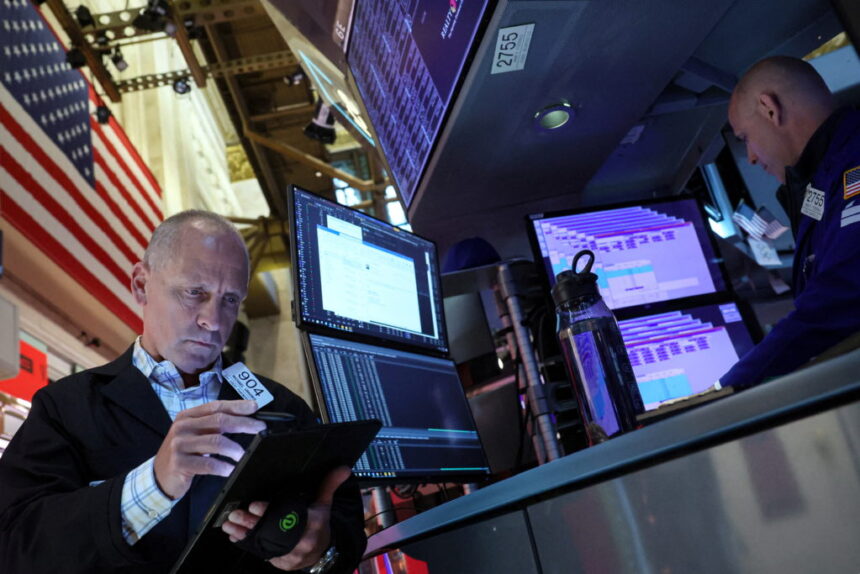
The stock market’s been a wild ride lately. Sometimes bad news tanks stocks, but other times, it’s party time!
The jobs report was pretty awful, way off from what everyone expected. But instead of panicking, investors cheered. Why? Because a weak job market might push the Federal Reserve to decrease interest rates.
Stocks jumped, with the S&P 500 reaching new highs. The Nasdaq and the Dow also went up because of news that should’ve alarmed people.
Jobs Report: The Short Version
ADP said private companies only produced 54,000 jobs last month. Experts thought it would be over 120,000. That’s a big difference.
Jobless claims also went up a bit. The job situation, which seemed fine before, now looks shaky.
This could be bad for workers soon. The Fed might think the economy’s slowing down, so they might decrease rates to give it a boost.
Why Bad News Is Good (For Now)
It sounds odd, but bad news can be good for Wall Street if it gets the Fed to decrease rates.
The Fed’s kept rates high to keep costs down. High rates make it costly to borrow cash for things like homes and cars. If the economy really cools off, the Fed might loosen things a bit.
Lower rates make borrowing cheaper, which makes stocks look better, especially tech stocks. Traders liked the jobs report.
Tech Stocks Are Killing It
Tech stocks are doing great right now. Big names like Apple, Amazon, and Microsoft all gained. Broadcom also perked up because of orders for AI chips.
Tech stocks love it when rates drop because their future earnings look better.
The Downside
Not everyone’s happy. Bad job numbers aren’t just about money; they’re about people. Fewer jobs can make people worry, spend less, and feel insecure.
Consumer spending keeps the economy going. If people stop spending, the economy could slow down. Some people on Wall Street don’t seem to get that.
It’s like traders are making bank while workers are struggling to pay their bills.
What Will the Fed Do?
Everyone’s watching the Fed closely. The next meeting is a big deal. The market thinks the Fed will decrease rates.
The Fed’s in a tough spot. They don’t want to decrease rates too fast and risk costs rising again. But waiting too long could hurt the economy. It’s tricky.
The Fed’s trying to keep cost down and get as many jobs as possible, which is hard right now.
How It Hits You
So, how does this all affect you?

If the Fed decreases rates, borrowing might get cheaper. Loans for school, credit cards, cars, and homes might be easier to get.
But if companies stop hiring, finding a job could be hard. Raises might be small, and a slowing economy could mean job losses.
Your investments might do better, but you might earn less.
The Big View
The U.S. economy is in a strange place. Costs have cooled a bit, but they’re still high. The economy is slowing, but it’s not collapsing. Stocks are up, even with bad job numbers.
It’s confusing. Bills are still eating up a big chunk of your paycheck. But for investors, the market is reaching new highs, so there are two different realities for people in the U.S.
This split between Wall Street and regular people isn’t anything new, but the stock market’s rise shows how wide the gap is.
In Conclusion
Stocks rising on bad jobs info might seem weird. Investors are happy because bad news probably means the Fed will decrease rates. Workers are worried about what a weak job market means for them.
Wall Street’s doing great. The S&P’s up. The Nasdaq’s rising. Everyone’s hoping for rate decreases. But questions still remain.
Will a shaky job report get the Fed to act? Or will it hurt the economy later?
The next Fed meeting isn’t just about numbers. It’s about hoping the economy gets back on its feet.